January 22nd, 2026
Staying Profitable in Low-Commission Models: Margin Protection Strategies for Modern Real Estate Agents
In recent years, the landscape of real estate has shifted dramatically. More buyers and sellers are seeking value-driven services, which has created new pressure on real estate professionals to lower commissions. The rise of discount brokerages, flat-fee listings, and widespread access to property databases have all contributed to an environment where being one of the low commission real estate agents is less an edge and more an expectation. With margins tightening, maintaining profitability can seem like an uphill battle.
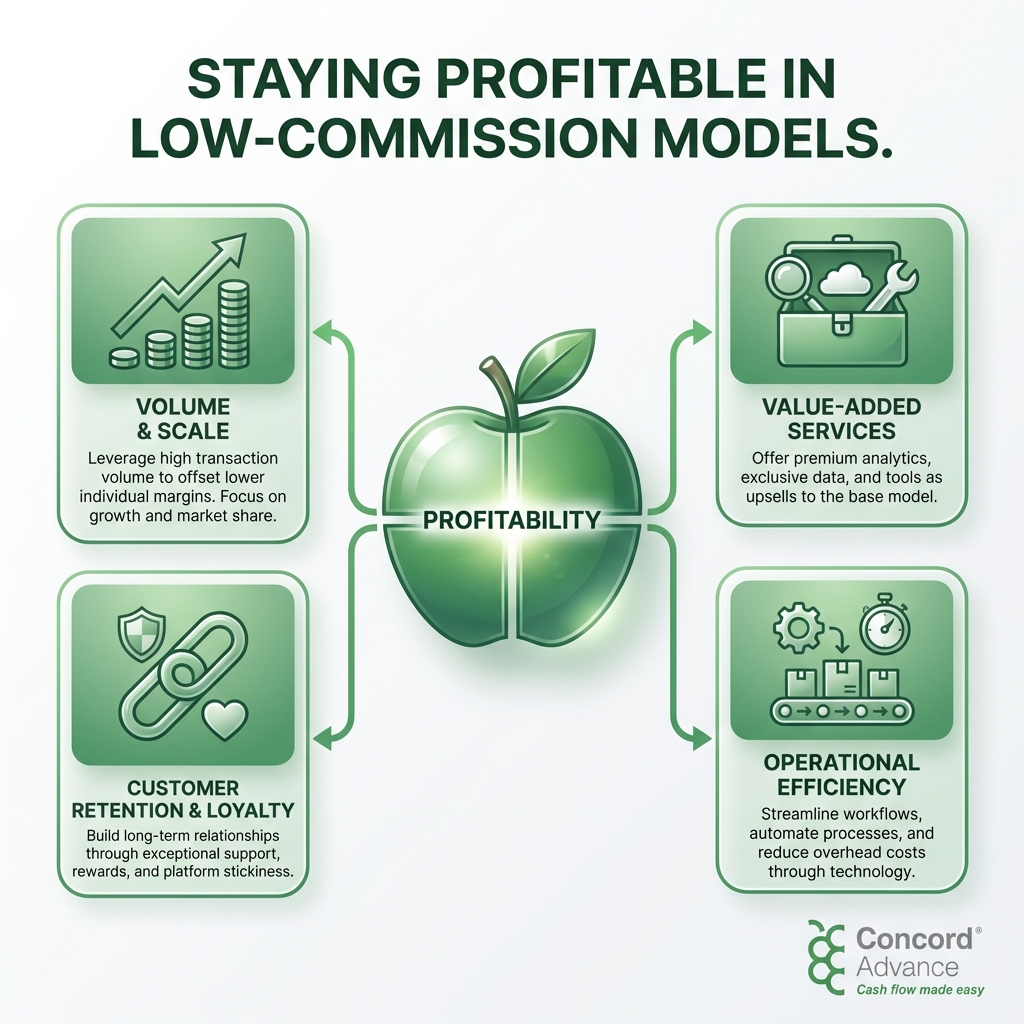
So how can real estate agents and brokerages stay profitable in low-commission models, protect their expense ratios, and maintain sustainable businesses even while offering the lowest realtor commission packages? The answer lies in a multi-faceted strategy that combines cost control, efficiency, value-added services, and creative marketing. Let’s dive deeper into how you can protect your margins, thrive in a shifting market, and build a business that doesn’t just survive, but grows.
The Changing Landscape: Why Commissions Are Shrinking
To understand how to protect your margins, you first need to grasp why commission structures are changing. Traditionally, real estate agents charged commissions ranging from 5% to 6% of the sales price, split between the buyer’s and seller’s agents. However, several forces have eroded these high commission rates:
Consumer empowerment: Thanks to the internet, many buyers can view homes, research neighborhoods, and even schedule showings online, reducing the perceived value of traditional representation.
Technological disruption: New platforms, apps, and virtual tour technology can automate what was once agent-intensive work. Flat-fee and discount models leverage these tools to offer lower pricing.
Increased competition: Larger brokerages and “team-based” models create efficiencies of scale, enabling them to slash commissions and still turn a profit.
Regulatory changes: Some markets, spurred by antitrust concerns or consumer demand, have begun to scrutinize or limit traditional commission models.
As a result, the lowest realtor commission rates are now common in many localities—sometimes even below 4%. Agents who stubbornly cling to old pricing structures often lose out on clients. But switching to a low commission model also brings new challenges, particularly around expense management and profitability.
Understanding Your Expense Ratios
The first step toward margin protection in a low-commission environment is a clear grasp of your expense ratios. In simple terms, your expense ratio is the proportion of gross income that you spend on running your business. This includes direct costs (marketing, advertising, split fees, transaction management) as well as indirect costs (rent, technology fees, continuing education, staffing).
For low commission real estate agents, the pressure is on to manage these ratios ruthlessly. Where a high-commission agent might be able to carry higher marketing spend or costly client gifts, those operating on thinner margins must scrutinize every dollar. Here are some best practices:
- Audit all expenses quarterly to eliminate or renegotiate unnecessary costs.
- Leverage technology to automate repetitive tasks, reducing labor overhead.
- Consider shared workspaces and virtual assistants rather than traditional brick-and-mortar offices and full-time staff.
- Use software or accounting tools to track your spending categories and keep your expense ratio below industry benchmarks.
- Most successful low commission models operate on expense ratios of 30% or lower, ensuring that a healthy chunk of every dollar earned drops to the bottom line. The more detail you have about where your money goes, the easier it is to make course corrections.
Redefining Value: Becoming Indispensable
Offering the lowest realtor commission doesn’t mean offering the lowest level of service. In fact, to justify even a low fee, you must prove the unique value you bring to clients. Here’s how to stand out while staying profitable:
Highlight Technology Forward Services
Tech-savvy buyers and sellers expect high-quality digital marketing, professional photography, drone tours, virtual walkthroughs, and even AI-powered analytics in pricing. These tools can often be delivered at scale and incorporated as part of your basic listing package without eating heavily into margins. Invest once in the right technology stack, and you can serve more clients simultaneously.
Package Services Creatively
Rather than simply discounting your commission, offer tiered service packages. A basic service might include MLS listing, yard sign, and automated scheduling, while more premium packages add features like custom staging, email campaigns, and 3D tours for an additional flat fee. By clearly packaging your offerings, you let clients self-select the value they want—and you maintain control over profitability.
Lean Into Local Expertise
While the internet has commoditized much of the home search process, local knowledge remains highly valuable. Offer unique market reports, micro-neighborhood insights, or exclusive data that clients can’t find elsewhere. Position yourself as a neighborhood authority and trusted advisor, not merely a transaction facilitator.
Leverage Social Proof
Collect and display testimonials, online reviews, and case studies demonstrating client satisfaction and success stories. If you can show seller clients that you consistently sell homes faster or above listing price—even at a lower commission—they’ll see real value in choosing you over competitors.
Streamlining Operations for Cost and Time Savings
Profitability is not just about how much you earn; it’s about how efficiently you work. Low commission real estate agents can’t afford to waste time or resources, so streamline your daily operations with these strategies:
Automate Lead Generation and Nurture
Use CRM software to capture, segment, and automatically follow up with web leads. Email drip campaigns, text message automations, and AI-driven chatbots can keep your pipeline full without the need for manual outreach.
Virtual Transaction Coordination
Leverage digital transaction management systems for paperwork, signatures, deadlines, and compliance. Eliminating physical paperwork and in-person meetings means you can manage more deals in less time, reducing per-transaction labor costs.
Outsource Non-Essential Tasks
Virtual assistants or specialized gig workers can handle appointment scheduling, marketing materials, social media updates, and other routine jobs. By outsourcing, you free up time for high-value tasks like negotiations or client consultations.
Embrace Remote Work
Shift away from traditional office leases in favor of remote work. Modern agents can conduct virtual tours, host online open houses, and even close deals over Zoom—all from a home office setup. Office rent is often among the largest fixed expenses, so minimizing or eliminating it can significantly improve your expense ratio.
Building a High-Volume, Referral-Driven Business
The cornerstone of profitability in low commission real estate lies in high transaction volume. Because you earn less per deal, you must complete more deals each month to maintain or grow your income. The key to scalable, volume-driven business is referral generation and streamlined, repeatable processes.
Deliver Memorable Client Experiences
Go above and beyond in communication, negotiation, and post-sale follow-up. People remember agents who underpromise and overdeliver—even more so if you deliver great results for less. Small personal touches, such as moving day check-ins or home anniversary notes, can pay long-term dividends.
Systemize the Referral Ask
Have a standard process for requesting testimonials and referrals at the close of each transaction. Make it easy for happy clients to recommend you via email, text, or social sites. The more established your process, the more likely you’ll see consistent referral business, which comes with a lower cost per lead.
Cultivate Local Partnerships
Network with lenders, contractors, stagers, and even local businesses to create a mutually beneficial referral ecosystem. When other professionals trust you to deliver for their clients, your inbox fills up with warm introductions for minimal marketing spend.
Optimize Your Marketing ROI
With every expense scrutinized, focus your marketing on channels that deliver the highest return. Track the cost per lead and cost per closed deal for every marketing initiative—Google Ads, Facebook campaigns, direct mail, sponsored social posts, and more. Eliminate or adjust underperforming channels, doubling down only on what works.
Communicating Your Low Commission Advantage
A low commission model won’t sell itself unless you clearly communicate its advantages to potential clients. Too often, agents believe that lowering their fee alone will make them the obvious choice. However, many sellers still worry that a lower fee means less effort, fewer services, or a lower sale price.
Here’s how to communicate the low commission model effectively:
Emphasize Net Proceeds
Educate sellers about the bottom line: net proceeds. Focus your listing presentations on the total dollars they keep after paying commissions and closing costs. Walk through real-world scenarios showing that your lower fee doesn’t mean a lower price—sometimes, your marketing even drives bidding wars.
Showcase Results, Not Savings Alone
Create a portfolio of sold homes with metrics like days on market, list-to-sale price ratios, and client testimonials. Back up your low commission offering with proof of your ability to market aggressively and negotiate top dollar for clients.
Address Objections Directly
Tackle common questions head-on in your presentations and on your website. For example: “How do you market homes for less?” or “Will I get less exposure with a discount agent?” Explain your streamlined processes, superior technology, and high-volume expertise.
Highlight Ethical, Transparent Practices
Be transparent about your fee structure. Today’s consumers appreciate honesty and clarity. Offer a written breakdown of which services are included, any add-ons, and exactly how your fee is calculated. When sellers know there are no hidden charges, they’re more likely to trust you.
Creative Revenue Streams for Margin Protection
Diversifying your income can further insulate you from slim margins. Here are some strategies to boost profitability without raising your base commission:
Offer Concierge Services
Add value by managing repairs, cleaning, staging, or landscaping for a fee. Many sellers are willing to pay for convenience, especially when it streamlines their move.
Provide Premium Marketing Upgrades
Upsell services such as custom video tours, social media ad campaigns, or exclusive print advertising. These fees can supplement your commission income and offer clients more choice.
Property Management
If you have investor clients or unsold listings, property management offers recurring revenue streams in between closings.
Buyer Rebates
Some markets allow you to offer a portion of your commission back to buyers as a rebate at closing. This can incentivize buyers to work with you and generate referrals for future business.
Agent Education and Licensing Courses
If you’re a broker, consider offering pre-licensing courses, continuing education, or agent mentorship for a fee. This creates a second income stream while growing your agent network.
Tax Strategies for Low Commission Agents
With tighter margins, every tax deduction counts toward your bottom line. Consult a knowledgeable CPA familiar with real estate to make the most of allowable write-offs, including:
- Home office expenses
- Vehicle mileage and maintenance
- Marketing and advertising expenses
- Professional dues and licensing fees
- Continuing education
- Independent contractor payments (virtual assistants, photographers)
- Depreciation on equipment (laptops, phones, cameras)
- Maximizing write-offs can improve your net income even if your gross revenue per deal is lower.
Adapting Mindset: Thriving, Not Just Surviving
The shift toward low commission real estate agents and slimmer margins is here to stay. Agents who thrive under these models are those who embrace change—adapting systems, focusing ruthlessly on efficiency, and remaining obsessed with client value.
Remember, margin protection isn’t just about slashing costs. It’s about creating a sustainable, scalable business that delivers outstanding results for your clients and a meaningful income for you. Low commission doesn’t mean “discounted” service; it can mean smarter, faster, and more consumer-friendly real estate—if you run the numbers right.
The Future of Profitability in Real Estate
Looking ahead, real estate will continue to see disruption and downward pressure on commission rates. There may be innovations still to come in contract management, predictive analytics, and even blockchain-powered property transfers. AI will take over more administrative and lead generation tasks, freeing agents to spend more time with clients and closing deals.
For now, the agents who succeed will be those who work lean, deliver exceptional value, and operate with a “client-obsessed, system-driven” mentality. By focusing on operational excellence, marketing ROI, referral volume, and creative income streams, you can carve out a profitable, rewarding career—even in the era of the lowest realtor commission rates.
Are you ready to embrace the future and build a thriving real estate business on any commission model? Take ownership of your expense ratios, become indispensable to your clients, and let smart systems do the heavy lifting. Profitability isn’t about what you charge; it’s about how you deliver—and how you run your business. The opportunity is there for agents ready to innovate and adapt. Make this new era your most profitable yet.

