
February 12th, 2026
In the dynamic world of real estate, one challenge that agents consistently grapple with is managing income volatility. Whether you’re a seasoned agent with years on the job or someone fresh off their first deal, the peaks and valleys of real estate earnings can create anxiety and make financial planning a daunting task. Traditional commissions are only paid when deals close, leading to dry spells that can stretch for weeks or even months. This is where advance commissions have emerged as a crucial resource. By providing early access to commission funds, advance commissions offer a powerful tool for real estate agents looking to smooth out their income and maintain a stable financial footing.
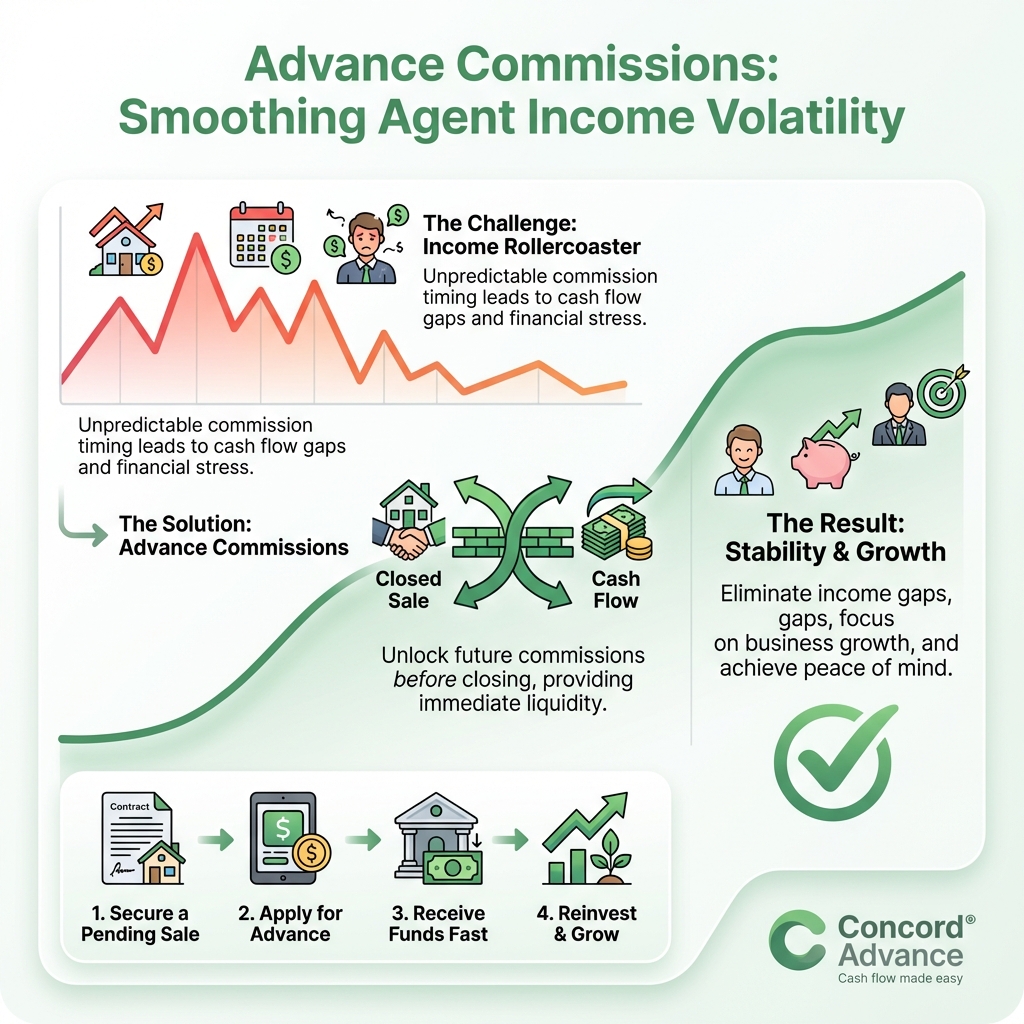
Understanding Income Volatility in Real Estate
One of the defining characteristics of working as a real estate agent is the non-linear income cycle. Unlike salaried positions with steady paychecks, agents earn a commission that is directly tied to closed transactions. However, the real estate cycle is anything but predictable. Deals fall through, buyers back out, negotiations stall, and even when everything goes smoothly, escrows can be lengthy.
This unpredictability introduces several problems. Without careful management, an agent can go through periods of feast and famine. During boom times, it’s easy to overlook the importance of budgeting and cash reserves. But when closings slow down, mounting bills, business expenses, and personal obligations don’t pause. This can lead to distress, difficult choices, and in the worst cases, drive talented agents out of the industry entirely.
The Role of Advance Commissions
Advance commissions are financial products designed specifically to address the unique cash flow challenges faced by real estate agents. In simple terms, an advance commission provider gives the agent a portion of their pending commission before a transaction actually closes. This advance is typically paid back with a fee once the deal is finalized and the full commission is paid out.
The key benefit is immediate access to funds that would otherwise be locked up until closing — potentially weeks or months later. This liquidity can be a lifeline, helping agents to handle urgent bills, fund marketing initiatives, or simply maintain peace of mind.
Reliability and Speed: Why Advance Commissions Win Over Agents
Agents who have used advance commission services consistently cite two main advantages: reliability and speed. Traditional loans can be cumbersome, requiring time-intensive applications, credit checks, and sometimes collateral. By contrast, advance commission providers streamline the process. Approval is often based on the deal itself rather than the agent’s creditworthiness, and funds often arrive within one or two business days.
This swift turnaround is critical. In real estate, opportunities can come and go quickly—whether it’s securing a new listing, launching a marketing campaign, or simply keeping up with regular business expenses. Advance commissions allow agents to stay proactive rather than reactive, positioning them for success even during uncertain market conditions.
Income Smoothing: A Strategic Advantage
The concept of income smoothing is vital in professions with irregular cash flow. In the context of real estate, income smoothing refers to strategies designed to level out financial highs and lows. Advance commissions are uniquely suited to this purpose.
By securing a portion of your commission in advance, you can create a consistent stream of cash flow. This enables you to manage monthly expenses more predictably, support ongoing business activities, and maintain your lifestyle, regardless of market fluctuations. For agents who rely solely on closing-day payouts, every delayed or lost deal can cause significant personal and professional stress.
How Advance Commissions Function: A Closer Look
The mechanics of advance commissions are straightforward but effective. Here’s how the process typically works:
Application: An agent with a pending commission applies to an advance commission provider. This may be done online and usually requires details about the transaction, the expected commission, and some information about the parties involved.
Approval: The provider evaluates the pending transaction, usually verifying its status with the closing attorney, title company, or broker. Approval is based on the likelihood of the transaction closing rather than the agent’s credit score.
Funding: Once approved, the agent receives an advance—typically between 70% and 80% of the net commission due—directly into their bank account.
Settlement: At closing, the advance plus a service fee is repaid out of the commission funds. The remainder is released to the agent.
Because advances are tied to specific transactions, there’s less risk for both the agent and the provider compared to traditional unsecured loans.
Managing Cash Reserves More Effectively
One of the core principles of good financial management for real estate agents is maintaining cash reserves. These reserves act as a safety net, allowing agents to weather income gaps without dipping into high-interest credit cards or personal savings. Building and maintaining cash reserves is a perpetual challenge due to unpredictable cash flow.
Advance commissions help solve this puzzle in two ways. First, they provide immediate access to funds without waiting for lengthy escrow periods to conclude. Second, this liquidity helps agents manage their reserves more strategically rather than exhausting them during dry periods.
Rather than draining savings in the hope that the next deal closes soon, agents can take an advance commission, preserve their cash reserves for true emergencies, and prevent financial stress from snowballing.
Budgeting for Agents: Building a More Predictable Financial Life
Creating and sticking to a budget is challenging when income is unpredictable. Many agents struggle to map out personal and business expenses with confidence when one bad month can disrupt their plans. Advance commissions help address this by making income timing more predictable and lessening the impact of transaction delays.
With more consistent cash flow, agents can:
- Plan regular expenditures for marketing, professional development, and business growth
- Handle ongoing personal obligations like rent or mortgage payments
- Invest in critical business tools and technology
Avoid expensive debt or credit utilization
A reliable cash flow through advance commissions enables agents to make smarter financial decisions that compound over time, improving both their business operations and personal well-being.
The Psychological Impact of Income Volatility
The financial implications of income volatility are clear, but the psychological impact is just as significant. The stress of waiting for deals to close, worrying about bills, or having to say no to promising opportunities due to short-term cash shortages can weigh heavily on agents.
Having access to advance commissions can drastically reduce this anxiety. With immediate funds available, agents gain confidence and mental clarity. This, in turn, supports better client service, stronger business relationships, and a healthier personal life. When you’re not worried about next month’s bills, you can focus on delivering the best possible service and building your business for the long term.
When Advance Commissions Make Sense
While the benefits of advance commissions are apparent, it’s also important to approach this tool with a thoughtful strategy. Advance commissions are best used as part of a larger financial plan, not as a replacement for sound financial management.
Some situations where taking an advance commission might make sense include:
Long Escrow Periods: When a deal is projected to close in several weeks or months, and you need funds sooner.
Pacing Business Growth: Using immediate capital for marketing campaigns or business development efforts that will drive future income.
Managing Unexpected Expenses: Covering sudden personal or business costs without depleting savings or taking on debt.
Bridging Gaps in Busy Seasons: Maintaining a consistent cash flow when deals are stacking up but closings are staggered over weeks or months.
It’s essential to weigh the cost versus the benefit—the fees associated with advance commissions are real, but for many agents, the value of liquidity and peace of mind outweighs the expense.
Keys to Maximizing the Benefits of Advance Commissions
To make the most of advance commissions, agents should integrate this resource into a broader strategy for budgeting and cash management. Here are a few best practices:
Know the True Cost: Be aware of the service fees involved. Compare offers from different providers and factor fees into your overall financial planning.
Balance with Cash Reserves: Use advance commissions to supplement—not replace—your cash reserves. The goal is to enhance your liquidity and preserve your savings.
Be Selective: Don’t take advances on every deal. Reserve this tool for situations when it provides the greatest advantage, such as long escrows or strategically timed investments.
Keep Building Your Business: The most powerful benefit of advance commissions is staying in action. Use the liquidity gained to pursue new listings, expand your network, or invest in your professional growth.
Monitor Your Finances: Track advances, repayments, and their impact on your overall cash flow. Regular check-ins will prevent surprises and ensure that you’re using this tool wisely.
Overcoming Myths and Misconceptions
Despite their growing popularity, misconceptions about advance commissions persist. Some agents worry that using an advance is a sign of poor financial management or desperation. In reality, advance commissions are a practical business decision used by high-performers and newcomers alike.
When integrated into a thoughtful financial strategy, advance commissions are a sign of prudent cash management and proactive business building. Rather than being a last resort, they are a smart response to the realities of today’s real estate market.
Choosing an Advance Commission Provider: What to Look For
Given the sensitive nature of real estate transactions and personal finances, it’s crucial to select an advance commission provider you can trust. Look for a company with:
Transparent Terms: Clear explanation of fees, terms, and the application process.
Fast Funding: The ability to deliver funds within one or two business days.
Excellent Reviews: Consistently positive feedback from other agents about reliability and professionalism.
Industry Experience: Providers who understand how real estate transactions function and work closely with industry professionals.
No Hidden Costs: Be wary of additional fees that may be buried in the fine print. Always ask for a full breakdown of costs before proceeding.
How Advance Commissions Compare with Other Financial Tools
Advance commissions are just one option for managing cash flow in a volatile income environment. It’s helpful to compare them with other common tools, such as:
Credit Cards: While accessible, credit cards often carry high-interest rates and minimum monthly payments that can quickly become burdensome.
Personal Loans: These can provide lump sums, but approval hinges on personal credit scores and can take longer to secure.
Home Equity Lines of Credit: For agents who own homes, these can be useful but involve significant risk and lengthy approval processes.
Broker Advances: Some brokerages offer internal advances, but terms and speed may vary, and not all brokerages provide this service.
Advance commissions generally offer a unique mix of speed, reliability, and flexibility that aligns well with the needs of busy agents facing fluctuating cash flow.
Preparing for the Future: Building Financial Resilience
In a profession where uncertainty is the norm, building resilience is key. This means developing strong habits—consistent budgeting, maintaining multiple income streams, and being proactive about cash flow management. Advance commissions are not a silver bullet, but they are a highly effective tool when used intentionally.
Financial resilience also means anticipating slow periods and planning accordingly. With the integration of advance commissions into your toolkit, you can approach lean months or unexpected delays with greater confidence. This lets you focus on closing deals and delivering value to your clients without being distracted by short-term financial stress.
Advance Commissions and Industry Trends
While advance commissions have been around for several years, recent market dynamics have made them more relevant. In competitive markets with longer transaction cycles, agents are recognizing the value of managing income volatility more proactively. Additionally, as technology streamlines the approval and funding process, advance commissions are becoming easier to access and less expensive.
Agents who get ahead of the curve by leveraging advance commissions as a standard part of their financial planning are better positioned to thrive, regardless of how the market shifts.
Steps to Get Started
For agents curious about integrating advance commissions into their income management strategy, the first step is research. Review different providers, compare their terms, and talk to peers who have used these services. Once you’ve identified a provider that aligns with your needs, build advance commissions into your regular budgeting process.
Have a clear sense of when an advance makes sense for your business, and be systematic about keeping records and tracking the impact on your financial health.
Success Stories: Real Agents, Real Results
Across the country, agents have used advance commissions to transform their businesses and lives. Some have avoided near-crises after last-minute deal delays. Others have used advances to fund high-impact marketing pushes that led to new listings and accelerated growth. All have benefited from reduced stress and a greater sense of security.
Testimonials consistently highlight not just the convenience, but the strategic value of income smoothing. By taking control of their cash flow, agents can make decisions for the long-term health of their careers rather than being forced into short-term compromises.
Conclusion: A New Era of Financial Empowerment
For today’s real estate agent, managing income volatility isn’t just about surviving—it’s about thriving. Advance commissions are changing the way agents approach cash flow, budgeting, and business planning. By providing rapid, reliable access to pending earnings, advance commission services empower agents to smooth out the bumps of an unpredictable industry, maintain critical cash reserves, and make smarter decisions for their businesses and their futures.
The journey of a real estate agent will always be marked by change, from market cycles to client demands. But with tools like advance commissions at your disposal, you can bring stability to your financial life and focus on doing what you do best: delivering extraordinary value to your clients and building a successful, enduring business. If income volatility has been a stumbling block, consider advance commissions as your bridge to a more predictable and prosperous path.

