
January 30th, 2026
The January Capital Playbook: Plan, Buffer, Execute
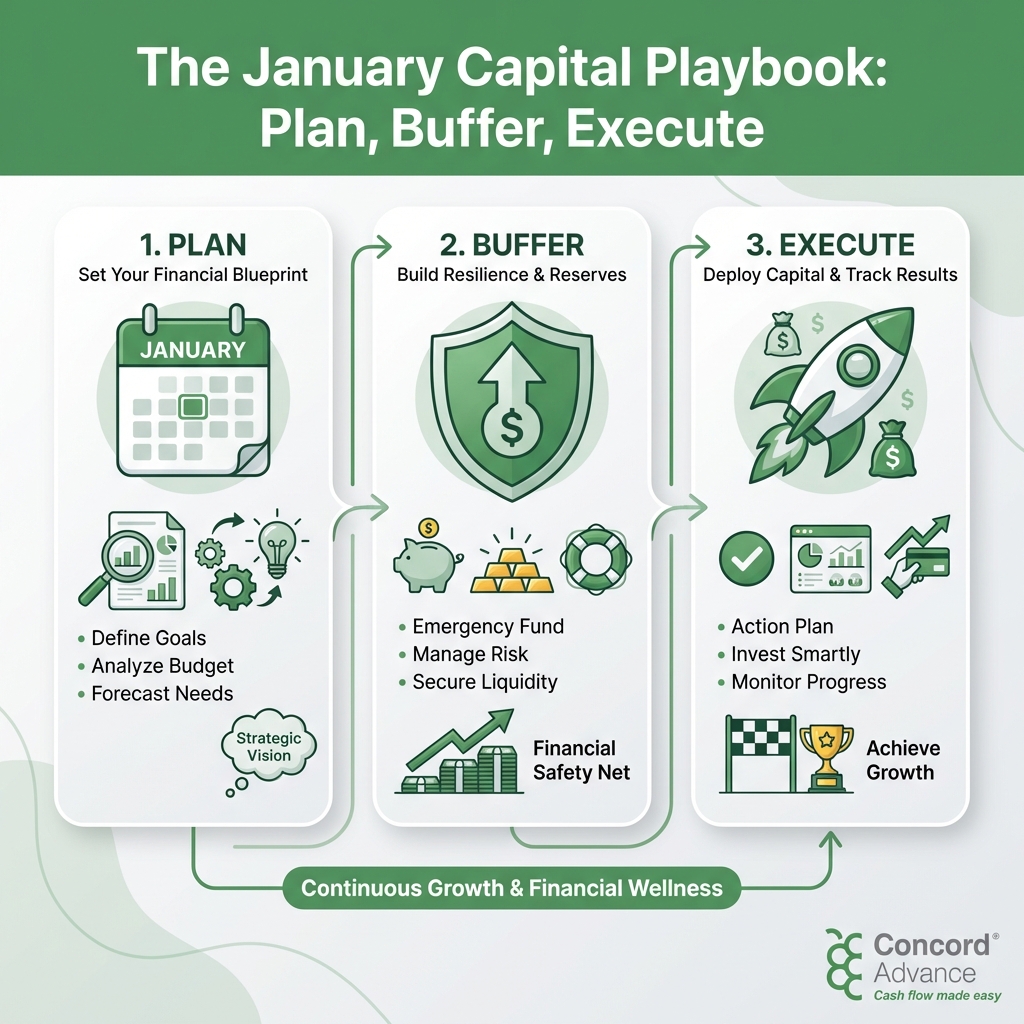
January marks the start of a new year and, for many in the real estate industry, the opportunity to set powerful intentions and strategies that will shape the success of the months ahead. Agents, brokers, and agencies are looking beyond resolutions and towards actionable playbooks—ones that address not only sales targets but also the inherent cash flow challenges of the industry. This January wrap-up playbook, “Plan, Buffer, Execute,” is designed to provide a practical guide to mastering your finances and operational tempo—leveraging tools like real estate commission advance solutions to create stability, momentum, and growth from the first quarter onwards.
Understanding January’s Unique Financial Landscape
January in real estate can be both exhilarating and nerve-wracking. On one hand, fresh listings and buyers emerge; on the other, the winter months traditionally see slower closings and elongated transaction timelines. For agencies and solo agents, this creates a peculiar tension: deals in the pipeline, but income still tied up in lengthy escrow and closing periods.
Why is this such a pivotal concern? Because ongoing business expenses—marketing costs, MLS fees, client engagement, office operations—continue regardless of closing delays. The winter months can strain even seasoned agents, making how you manage cash flow as important as generating new business.
Commission Delays: The Hidden Threat
Commission checks represent not just payment for work done but also the fuel for your next round of deals. But every real estate professional knows the agony of waiting for those commissions to finally hit your account. Escrow tangles, unforeseen delays at title, or buyer financing hiccups can string out your payday by weeks or even months.
This is where commission advance solutions become vital for keeping your business running smoothly. By unlocking access to your earned but unpaid commissions, you gain the buffer needed to push through slow months without sacrificing service quality, new client engagement, or your own peace of mind.
The January Capital Playbook: Your Step-by-Step Wrap-Up
Every winning playbook starts with clear steps. For January, think in these high-impact phases: Plan, Buffer, Execute.
Phase 1: PLAN: Set the Stage for Confidence and Clarity
Evaluate Your Pipeline
The first step is to undertake a hard, unsentimental review of your pending deals. Start the month with a sheet (digital or on paper) mapping out all the listings and buyers you anticipate closing within the next 60 to 90 days.
Identify which transactions may close early and which are likely to get delayed due to inspections, appraisals, or lender underwriting timelines. Categorize them by likelihood of on-time payout. This clarity is crucial for reliable forecasting.
Set Monthly Income Goals
Don’t let January’s typical sluggishness dictate your mindset. Instead, establish clear, realistic targets for the month. Then, extrapolate those numbers to build quarterly goals. Visualize how many listings, contracts, and closings are needed per week to reach your target.
Remember, successful agents focus not just on deals but on revenue. Keep that commission math front-and-center, so every call and showing directly ties back to your financial objectives.
Align with Your Broker or Team
Open communication with your broker or team leads adds discipline to your plans. Discuss your targets, but also any anticipated bottlenecks. The best offices function as support networks in slow months—and accountability is easier when everyone shares their goals and obstacles.
Audit Your Operating Expenses
Take inventory of all recurring costs—MLS dues, advertising budgets, gas for showings, software subscriptions. See where you might trim expenses in lean months or re-allocate funds to marketing tactics proven to yield the best ROI in your market and season.
Explore Lead Generation Strategies
January is a powerful time to revive your lead database, re-engage past clients, and refresh local presence. Use this downtime to start new email drip campaigns, update your website and social profiles, and call on dormant leads who may negotiate listing contracts in spring. Investing in relationships now will pay exponential dividends as the market heats up.
Phase 2: BUFFER: Your Safety Net Against Unpredictable Cash Flow
Understanding Your Cash Flow Gaps
Even the best-laid plans can get derailed by unforeseen delays. Waiting on commissions that are tied up in escrow can leave your business exposed to cash flow crunches. This is when having buffers in place separates surviving agents from those who thrive through quieter months.
Enter commission advance solutions—or an advance on commission—designed precisely for real estate professionals facing these seasonal bottlenecks.
How Does a Real Estate Commission Advance Work?
A commission advance is a financial solution that enables agents to gain access to a portion of their expected commission from a pending, under-contract sale before the deal officially closes. In exchange for a small fee, the advance provider fronts you the funds and then gets repaid from the actual commission proceeds once escrow closes.
It’s not a loan: no personal or business credit check is required, no monthly payments, and no new debt on your books. Instead, it’s an early payout: you’ve already earned the commission; the advance provides you with liquidity during the waiting period.
Key Benefits of Using Commission Advances in January
Improved Cash Flow
Bridge the gap between closing deals and getting paid, ensuring you can cover business and personal expenses without panic or compromise.
Fuel for Marketing
Keep marketing efforts steady through slow periods, so you emerge strong and top-of-mind as spring buying season arrives.
Peace of Mind
Reduces financial stress, allowing you to focus on closing transactions and providing superior service rather than worrying about bills.
Business Growth
Unlock capital for strategic moves, such as joining referral networks, attending industry conferences, or investing in listing photography that will set you apart.
When Should You Consider an Advance on Commission?
Commission advances are particularly valuable in these scenarios:
- You have high-value deals pending but delayed by third-party processes
- Monthly expenses (office, association fees, personal) are due before closings are anticipated to fund
- You wish to invest in business growth (marketing, lead gen) in anticipation of ramp-up as market activity increases post-winter
- You are a newer agent with limited reserves, making lengthy commission delays potentially hazardous to business viability
- Buffers such as reserves and advances don’t eliminate risk, but they give you freedom to make bolder business moves—or simply sleep better at night.
Evaluating Commission Advance Providers
Not all commission advance partners are created equal. Use these criteria to select a provider that complements your January capital strategy.
Speed of Funding
Best-in-class providers can typically process and fund your advance application within 24 to 48 hours.
Transparent Fee Structure
Look for partners who outline upfront fees with no hidden costs, and who clarify exactly how repayment works at closing.
No Credit Checks
Ideally, your advance comes with no personal or business credit checks—approval should be based on the deal itself, not your credit score.
Flexibility
Choose a provider that allows you to access advances on single deals or multiple contracts simultaneously, giving you maximum flexibility as your pipeline changes.
Reputation and Service
Customer reviews and industry references matter. Aim for advance partners with solid experience in real estate and a reputation for supportive, responsive customer service.
Phase 3: EXECUTE: Turning Plans and Buffers into Action
Execute Discipline in Daily Operations
January’s top producers treat every day as an opportunity to execute on their plan. Here’s how to make the most out of your month:
Work Your Warm Leads
With the holiday lull passed, reach out with targeted follow-ups to every buyer and seller who had expressed interest in Q4. Many are now ready to move forward, especially as new inventory comes online.
Double Check Every Deal
Surprises in contracts, title, or appraisals can result in weeks-long delays. Partner closely with transaction coordinators, title agents, and lenders to spot and rectify snags before they happen. Precision now pays off in timely commission payouts later.
Maintain Marketing Momentum
Keep your online and offline outreach steady. Publish market updates, share neighborhood spotlights, and showcase testimonials from past clients. Use downtime to schedule your next few months of content so that, when business accelerates, your marketing momentum is already established.
Leverage Commission Advances to Accelerate Deals
If you have pending deals with certain payouts, now is the time to use a commission in advance for targeted investments. Whether funding a new ad campaign, staging a prime listing, or simply paying your bills, these advances let you act fast without waiting for bureaucracy to release your funds.
Network Actively
Attend January industry meetups, webinars, or local networking events. Other agents may have referrals, and you could find motivated out-of-town buyers looking to relocate before the busy season begins. Networking also surfaces new vendor partnerships and potentially profitable collaborations.
Adapt Your Strategy
Stay nimble: if you see closing schedules shifting or financing hurdles increasing, be ready to reallocate your anticipated commission advances and adjust spending plans. The most successful agents are those who execute with discipline but also pivot tactically as the market ebbs and flows.
Measuring and Refining Success: The January Debrief
The close of January presents a golden opportunity to measure and refine your processes. Here are ways to extract maximum insight from your wrap-up.
Review Income vs. Plan
Did actual closings align with your forecast? Where were the over- and under-performances? Map commission receipts against your target and note any mismatches in the timing or amounts.
Assess Marketing ROI
Which campaigns or tactics brought in the most listings or buyers this month? Can you double down on those for February? If an advance on commission helped fund a successful effort, make note of the compound benefits for future planning.
Evaluate Buffer Effectiveness
If you used a commission advance, how did it impact your operations and peace of mind? Did it create enough runway for you to push through bottlenecks without missing obligations or limiting growth opportunities? Gathering honest feedback—both personally and from your accounting or operations team—sets you up for more strategic financing decisions in future slowdowns.
Gather Team Feedback
If you manage a team, hold a debrief to see what worked, what didn’t, and what challenges lay ahead. Open dialogue in January creates alignment and camaraderie that powers group momentum through the remainder of Q1.
Plan for February and Beyond
Build on the lessons of January as you look forward. Refresh your pipeline outlook, revisit your cash flow buffer plans, and set more ambitious but realistic goals for the coming months. The discipline you build now creates exponential benefits as the market heats up into spring.
The Big Picture: Why Capital Discipline in January Sets Up Year-Round Success
It’s tempting to treat January as a holding pattern: a month for making resolutions and waiting for spring’s busier season. But this mindset squanders one of real estate’s most strategic opportunities. By approaching January with a disciplined capital playbook—planning for variable cash flow, buffering yourself against unpredictability with tools like commission advances, and executing daily with measurable intent: you not only survive quieter periods but also create a critical edge for the rest of the year.
A few dollars invested today: whether in marketing, networking, or operational stability—yield compounding returns as the market cycles back to full speed. Commission advances are not just a stopgap; they are a strategic lever, allowing you to leapfrog over cash flow constraints and pursue opportunities that would otherwise be out of reach.
For ambitious agents and brokers, mastering January’s capital playbook is the difference between hoping for a strong year and being in complete control of your trajectory.
Frequently Asked Questions about Real Estate Commission Advances
What is a commission advance in real estate?
A commission advance is a financial transaction where a real estate agent or broker receives a portion of their yet-to-be-paid commission from a pending sale before the deal closes. The agent pays a small fee, and the advance provider collects reimbursement from the eventual commission payment directly at closing.
How does a commission advance differ from a traditional loan?
Unlike loans, a commission advance isn’t based on your creditworthiness or ability to pay back with interest. Approval is tied exclusively to the deal itself. There’s no debt created; it is a cash-flow solution based on money you’ve already earned through your pending contract.
Will my client or broker know about my commission advance?
Advance providers typically work behind the scenes with your brokerage’s escrow or accounting team. Client involvement is unnecessary and does not impact the sale process.
What deals are eligible for a commission advance?
Generally, deals under contract with set closing dates and all primary contingencies removed are eligible. Short sales or highly contingent contracts may not qualify.
Are there risks to taking a commission in advance?
Every financial product comes with trade-offs. The biggest risk is that, if the deal falls apart before closing, the advance must be repaid. This makes it essential to only seek advances on deals you feel confident will close and to read your provider’s terms carefully.
How do I apply for a commission advance?
Most commission advance providers offer online applications—simply provide documentation on your pending contract, anticipated close date, and the address in question. Approvals and funding can be completed in as little as one business day.
What’s the typical fee for a commission advance?
Fees vary, depending on your provider and the length of time until closing, but typically range from 8 percent to 12 percent of the expected commission payout. Evaluate the fee structure alongside any potential opportunity cost of delayed marketing, missed expenses, or lost opportunities.
Putting It All Together: Your January Wrap Up
January is not about coasting or waiting for better market conditions. It’s about laying the very foundation that supports your year-long ambitions. By entering the month with a battle-tested capital playbook—one that plans carefully, buffers wisely (including using commission advances strategically), and executes relentlessly—you’ll turn what’s often perceived as a slow month into the catalyst for lasting momentum.
Real estate success is built on far more than sharp sales skills or local market knowledge. It comes down to being as disciplined with your finances as with your lead generation, knowing when to invest, when to hold, and when to leverage the capital tools available to you.
Embrace January as your proving ground. Analyze your pipeline, set precise goals, buffer your cash flow with all the tools at your disposal, and execute your daily routines with intention. Whether you’re a new agent discovering your stride or a seasoned broker recalibrating for growth, mastering these principles now will ensure not just survival, but breakout success for the rest of the real estate calendar.
In the real estate business, the agents who win are the agents who prepare, buffer, and execute: regardless of the calendar page. January, tackled with the right playbook, can be your launchpad to a year of prosperity, innovation, and unshakable financial confidence.

