
January 27th, 2026
For real estate professionals, the promise of uncapped earnings is enticing but the path to those commissions is rarely a straight line. Unlike salaried professionals, most Realtors must navigate financial ups and downs driven by seasonal sales fluctuations, unpredictable deal pipelines, and long stretches between closing and commission payouts. Without a proven cash-flow management system, many agents find themselves stressed or even sidelined by cash constraints. This foundational guide is designed to empower Realtors with a practical, capital-ready blueprint for mastering annual cash flow combining proven financial strategies, awareness of real estate seasonality, guidance on commission timing, and proven tools like commission advances to turn uncertainty into opportunity.
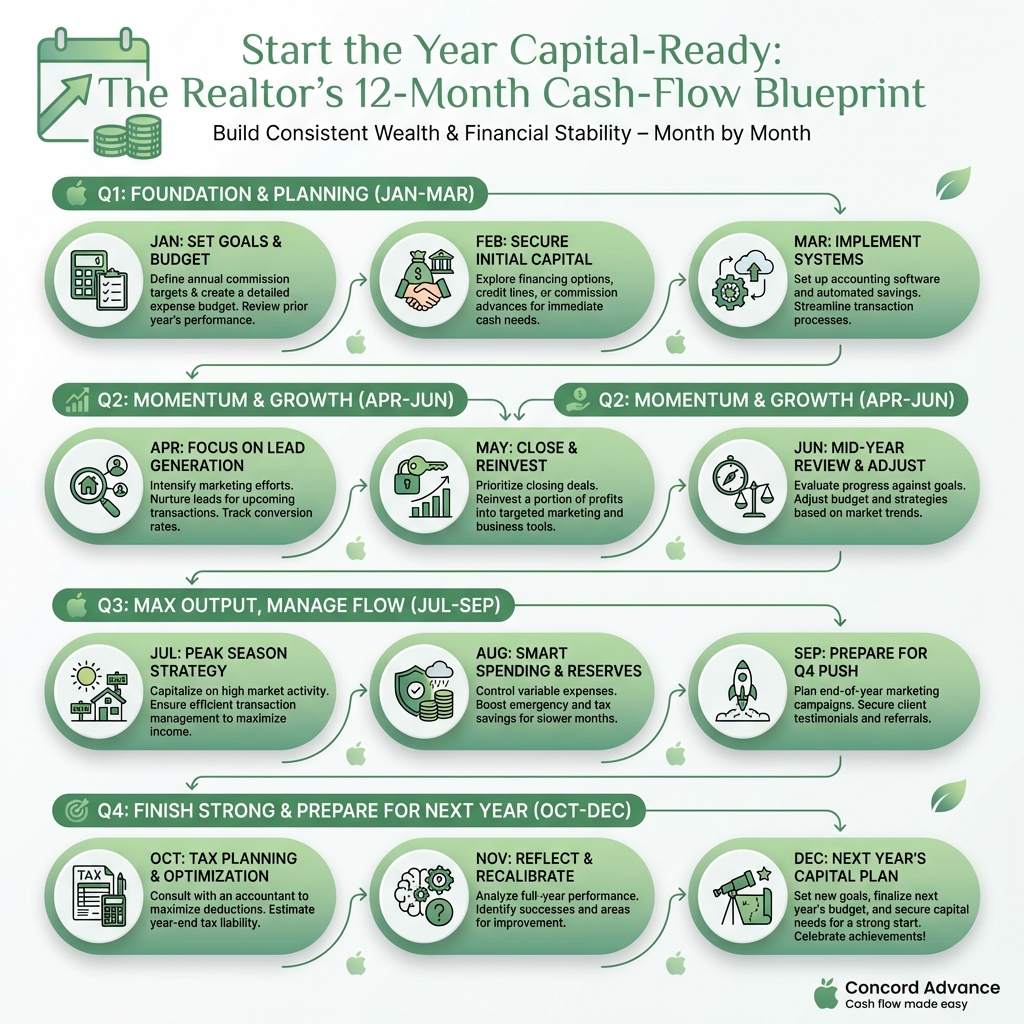
Why Realtors Need a Cash Flow Plan
In most businesses, a steady paycheck brings predictability. In real estate, income comes in bursts. You can spend months nurturing leads, marketing listings, negotiating deals, and only get paid after a property closes assuming everything goes smoothly. Deals fall through, closing dates get delayed, and market activity ebbs and flows with the seasons.
With so much outside of your control, a personal cash flow plan isn’t just helpful it’s essential. Without one, you risk running into cash shortages that disrupt your marketing, stall your growth, and add unnecessary stress. By planning ahead, building financial buffers, and knowing when and how to leverage resources like real estate commission advances, you can flip the script: controlling your finances instead of letting them control you.
Understanding Real Estate Seasonality
Every Realtor learns quickly that the housing market runs on its own calendar. Understanding these cycles is the first step in building your cash-flow plan.
Spring Surge
Many markets heat up with the weather. Spring into early summer typically brings the highest real estate activity, as families aim to move before the next school year and buyers shake off the winter slowdown. Expect more listings, more buyer inquiries, and a rush of transactions during March through June.
Summer Plateau
While June and July remain lively, real activity can plateau as families leave for vacations. Listings linger on the market. Closings continue, but the pace may soften as August nears.
Fall Fluctuations
Fall brings a second (smaller) wave as school resumes and buyers who’ve missed out in spring re-engage. September through November can be productive, but momentum often dips heading into the holidays.
Winter Slowdown
November through February are traditionally the slowest months for residential sales, as homeowners pause for the holidays or wait for better weather. Less inventory, fewer showings, and fewer closed transactions can pinch cash flow during this period.
Regional and market-specific variations apply, but most Realtors can chart these patterns year after year. By mapping your own market’s cycle and your past results you’ll gain a realistic sense of when to expect peaks and valleys in your income stream.
The Impact of Commission Timing
It’s not just about how many deals you close timing is everything. Most real estate agents only earn a commission when a sale closes. The journey from signed contract to paycheck can take weeks or months, especially if inspections, financing, or other contingencies cause delays.
Consider these typical lags in commission timing:
Pipeline Building
It can take weeks or months to cultivate a buyer or seller lead before listing or engaging in a home search.
Under Contract to Closing
Contracts are signed, but closing may not happen for 30, 45, or 60 days sometimes longer, especially with new builds or short sales.
Post-Closing Payouts
Some brokerages process commission payments within days. Others may take a week or more, adding another waiting period.
This means your daily work today may not reflect in your bank account for months. Without careful planning, even top producers can find themselves cash-strapped between closings.
Core Elements of the 12-Month Realtor Cash-Flow Blueprint
To overcome these unique financial challenges, your realtor cash flow plan should address four pillars:
Forecast Your Income
Project expected gross commissions for each month, factoring in your local market seasonality and your own historical production. Use realistic assumptions don’t count future chickens before they hatch, but do stay ambitious.
Estimate Your Expenses
Itemize fixed business costs (MLS dues, brokerage fees, marketing, office supplies, transportation, insurance, etc.) and variable ones tied to transaction volume (staging, photography, client gifts, closing costs advances).
Time Your Cash Flow
Overlay your income and expenses on a 12-month calendar by expected receipt and due date. Account for lags in closings, delays, and slow months.
Build in Buffers and Capital Tools
Plan to maintain cash reserves that cover 2-3 months of operating expenses. Know your options for bridging cash gaps, such as lines of credit or leveraging a real estate commission advance provider.
Let’s build out each step in detail with a downloadable cash-flow template at the end so you can put this plan into practice.
Step One: Mapping Annual Income Projections
Start by gathering your business plan, transaction history, and knowledge of your market’s cycles. Break your annual income goal down month by month, using the previous years’ closings as a baseline. If you’re new to real estate, use your broker’s or team’s data or reputable industry benchmarks.
Important tips for projecting income:
- Be conservative with pending deals; only count transactions with signed contracts and high closing probability.
- Adjust for seasonality using your market’s actual closing trends. If you usually close 40% of annual deals in Q2, reflect it.
- Track both the number of expected closings and average commission per deal to spot shifts (like more first-time buyers vs. luxury listings).
- Maintain a living document update every time a deal is added to or falls out of your pipeline.
Step Two: Estimating Business and Personal Expenses
A successful real estate career hinges on consistent marketing and operational investments yet many Realtors are surprised by fluctuating expenses. Start by listing all regular costs, using bank statements and invoices for accuracy.
Common fixed business expenses:
- MLS and association dues
- Brokerage fees or desk fees
- Website, CRM, and marketing tools
- Office space or coworking memberships
- Auto costs (lease, gas, parking)
- E&O and liability insurance
- CE courses and licensing renewals
- Cell phone and internet
- Common variable expenses:
- Listing photography and videography
- Staging and repairs
- Open houses and event catering
- Online ads and print marketing
- Client gifts and closing celebrations
- Contracted ISAs or virtual assistants
- Travel for showings, conferences, or networking
Don’t forget personal overhead housing, utilities, groceries, debt payments, and insurance. In slow months, your cash flow must cover both business and essential personal expenses.
Step Three: Creating Your 12-Month Cash-Flow Calendar
Bring together your income and expense projections in a calendar format. Mark the estimated date commissions will arrive (factoring in contract-to-close delays), as well as due dates for expenses.
- Visualizing these inflows and outflows by month clarifies:
- Which months you’re likely to have a surplus
- Periods where expenses outpace commission receipts
- Potential pinch points where working capital is needed
Step Four: Seasonality Buffers and Capital Readiness Tools
Carrying through lean months is about more than optimism it’s cash in the bank today to cover uncertainties tomorrow.
Best practices for maintaining financial readiness:
- Build a buffer equal to 2-3 months of total (business and personal) cash needs. Keep these funds in an accessible, high-yield savings account.
- Regularly sweep “peak month” surpluses into your buffer, separate from your primary checking.
- Revisit and update your buffer level quarterly as your closing pace or living expenses change.
- In addition to your saved buffer, know your working capital options:
- Personal or business line of credit a flexible, low-cost backup, if available
- Business credit cards limited use due to higher rates, best for short-term, small expenses
- Real estate commission advance an increasingly popular tool for agents who prefer not to take on debt or wait for slow-paying closings
Leveraging a Real Estate Commission Advance
Commission advances let agents access a portion of their earned, pending commissions before closing. Providers vet the transaction, advance you a percentage (often 70-90% of your commission), and are repaid at closing.
How this helps:
- Smooths out uneven cash flow if a pipeline kink or closing delay would otherwise create a crunch
- Eliminates the need to miss marketing opportunities (like a big listing or advertising slot) due to temporary capital shortfalls
- Allows you to cover recurring business costs or personal overhead without dipping into emergency savings or taking on expensive credit card debt
Best practices for using a commission advance:
- Treat it as a temporary working capital solution, not a permanent crutch
- Carefully vet advance providers on reliability, fees, service speed, and transaction limits
- Use advances strategically in months when a delayed closing would create hardship or prevent revenue-generating activity
- Combine with your cash-flow forecast knowing in advance which months may require this tool, and how it impacts overall profitability
How to Monitor, Adjust, and Grow
A great cash-flow plan is dynamic, not static. Revisit your forecasts monthly and quarterly, updating for:
- Unexpected expenses (or savings)
- Faster- or slower-than-expected closing timelines
- Market shifts impacting your pipeline
- Changes in deal size or average commission
Consider maintaining a “living” cash flow document in a spreadsheet or finance app, adjusting each variable as new information comes in. Over time, you’ll gain sharper foresight and ever-greater readiness to capitalize on new opportunities.
The Real-World Benefits of Capital-Ready Planning
Agents who operate without a year-long cash-flow plan often wind up stressed, reactionary, or forced to make poor decisions like slashing marketing in slow months or passing on great leads due to financial pressure. Contrast this with the empowered agent who knows where every dollar is going, when every paycheck is likely to hit, and how to access liquidity when cash flow tightens.
With a capital-ready mindset, you can:
- . Confidently invest in marketing and client service year-round
- . Take calculated risks like hiring, lead buying, or attending industry events in time for peak opportunities
- . Negotiate from strength, not desperation, when it comes to fees or business investments
- . Avoid the high costs of missed deals, overdraft fees, last-minute borrowing, or missed bill payments
- . Enjoy greater peace of mind knowing you’re prepared, secure, and able to focus on clients, not cash flow.
- . The Path to Growth: Cash Flow as a Lever
- . Cash flow mastery isn’t just about survival. It’s about scaling your business and claiming new territory. Use your steady financial footing to:
- . Order premium marketing materials or digital campaigns before competitors
- . Invest in skill-building like hosting seminars, upgrading your CRM, or joining a mastermind
- . Hire a transaction coordinator, marketing assistant, or inside sales agent to multiply your productivity
- . Offer enhanced client perks (like staging, upgraded photography, or moving services) that attract more and better listings
By knowing when and how your capital will flow all year, you’re always ready to act.
Key Takeaways for the Capital-Ready Realtor
A predictable, growth-oriented real estate business demands forward-looking cash-flow planning, not backward-looking panic. By understanding your market’s seasonality, monitoring commission timing, tightly tracking business and personal expenses, and building both buffers and flexible capital tools (like commission advances) into your strategy, you’ll work with confidence through every cycle.
Whether you’re a solo agent or leading a team, implementing this 12-month cash-flow blueprint keeps your business resilient and your ambitions limitless.
Ready to get started? Download the free cash-flow template and start the year capital-ready. Your future self and your clients will thank you.
For further guidance on managing your real estate cash flow and making the most of commission advance solutions, contact a reputable provider with industry expertise who can answer your questions, support your growth, and stand alongside you through every season in your real estate career.

